The images were shared in private. They were meant for one person. They were meant to stay between two people who trusted each other. Then the relationship ended. The trust broke. And the images became weapons.
Revenge porn is the non-consensual sharing of intimate images. It is a form of sexual abuse. It is a crime in many places. And it thrives on social media platforms because those platforms were built in ways that make it easy, profitable, and almost consequence-free.
The Revenge Porn Helpline recorded nearly 25,000 reports in 2025. That is the busiest year since the helpline launched in 2015. Over 20,800 intimate images were reported for removal, a 34 percent increase from the previous year. Of those images, 98.9 percent were of women. Women had an average of over 10 images shared per case. And 84.6 percent of female victims identified a male perpetrator, most commonly a current or former partner.
These are not anonymous strangers. These are people the victims knew. People they trusted. People who weaponised that trust when the relationship ended.
How Social Media Makes It Easy
Social media platforms were not designed to host revenge porn. But they were designed in ways that make it possible, easy to spread, and difficult to stop.
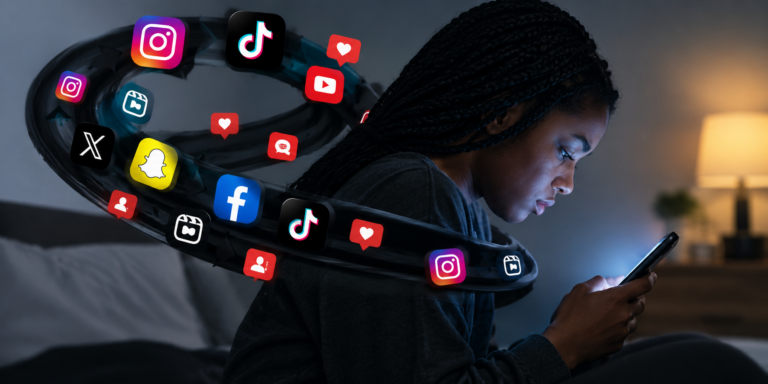
The architecture of the platforms provides the infrastructure. Private messaging allows the initial sharing between partners. Once the relationship ends, those images become leverage. The platforms’ sharing features, from posts to stories to direct messages, allow rapid distribution. The images spread faster than any removal effort can keep up with.
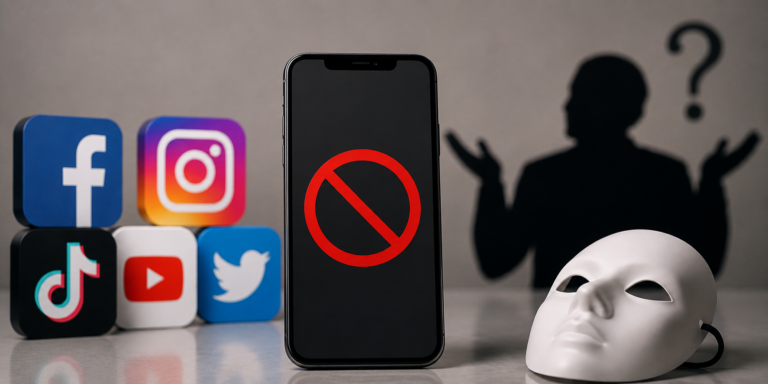
The platforms’ anonymity features protect perpetrators. Fake accounts. Disposable profiles. The ability to share content without revealing identity. A man can distribute intimate images of his ex-partner from an account that has no connection to his real identity. The victim knows who did it. The platform does not. The police cannot trace it.
The platforms’ scale makes moderation impossible. Millions of images are uploaded daily. The platforms rely on automated systems to catch violations. But revenge porn is difficult to detect automatically. An image of a woman in a bikini is not a violation. An image of the same woman without clothing is. The context matters. The consent matters. The algorithms cannot see context or consent.
The Legal Gaps That Allow It
The laws are catching up, but slowly and unevenly.
Some countries have strong laws. The United Kingdom criminalised the sharing of intimate images without consent in 2015. Italy did the same in 2019. Canada’s law even covers threats to share images, not just the sharing itself. The United States passed the TAKE IT DOWN Act in 2025, creating enforceable takedown obligations with a 48-hour response window.
But many countries have no specific laws. And even where laws exist, enforcement is difficult. The perpetrator may be in a different jurisdiction. The platform may be based in a third country. The content may be hosted on servers in a fourth. The legal system was not built for this kind of borderless crime.
There is also a gap that platforms exploit. In some legal frameworks, the person who merely views the content without sharing it is not committing a crime. The distributor is punished. The consumer is not. This creates a market. The distributor knows there is an audience. The audience faces no consequences. The demand drives the supply.
The Victim-Blaming Culture
Revenge porn thrives because the culture supports it.
Research on societal attitudes shows that victim-blaming is common. One study found that approximately 32 percent of respondents blamed victims to some degree. In qualitative research, the rates were higher. When students were asked about hypothetical revenge porn scenarios, most attributed some level of responsibility to the victims. Only 15.8 percent blamed the victim not at all.
The blame is gendered. Men blame victims more than women. People who endorse traditional gender roles blame victims more. People with lower empathy blame victims more.
The message is clear. If you took the photo, you are responsible for what happens to it. If you shared it with someone you trusted, you should have known better. If you sent it to your partner, you forfeited your right to privacy. The victim is put on trial. The perpetrator walks free.
The Shame That Keeps Victims Silent
Shame is the perpetrator’s greatest weapon.
Victims of revenge porn report devastating emotional consequences. The Revenge Porn Helpline reported that reports of worsening mental health conditions doubled year-on-year. Job loss. Financial harm. Relationship breakdown. Suicidal ideation was reported 50 times.
But most victims never report. Only 4 percent of those who contact the helpline go on to report their abuse to the police. Of those who did report, 76 percent described negative experiences.
The shame keeps them silent. The fear of judgment. The fear of not being believed. The fear that people will find the images. The fear that the images will never go away. The silence protects the perpetrator. The silence allows the abuse to continue.
The Manosphere and the Culture of Abuse
Revenge porn does not happen in isolation. It happens within a culture that normalises it.
Research on the manosphere, an online network of forums, influencers, and communities that perpetuate misogynistic ideologies, shows how revenge porn is used as a tool of retaliation. One investigation found a network of male-dominated Telegram groups sharing non-consensual intimate images of women from Facebook groups. Their justification was retaliation. The women had exposed predatory men. The men retaliated by sharing their intimate images.
The culture reinforces itself. The platforms host the content. The communities normalise it. The laws fail to stop it. The victims stay silent. The cycle continues.
The Hard Truth
Revenge porn thrives because it works. It humiliates. It controls. It punishes. And it does all of this with minimal risk to the perpetrator.
The platforms profit from the engagement the content generates. They have the resources to stop it. They choose not to invest those resources because the content drives traffic. The laws are slow. The enforcement is inconsistent. The culture blames the victim. The victim stays silent. The perpetrator walks free.
This is not a technology problem. It is a culture problem. It is a power problem. It is a choice made by platforms that prioritise engagement over safety and by societies that prioritise judgment over justice.
Words of Wisdom
Your body is not a weapon. Your trust is not a liability. Your privacy is not a privilege that can be revoked by someone else’s cruelty.
If you have been a victim of revenge porn, you are not to blame. The shame belongs to the person who betrayed you. The shame belongs to the platforms that host the content. The shame belongs to the culture that blames you.
If you are considering sharing intimate images, know the risks. Not because you are wrong to trust. Because the world has not yet earned your trust.
If you are a man, speak up. When your friends share intimate images without consent, call it what it is. Sexual abuse. A crime. A betrayal of trust. Silence is complicity.
The ModafVibe Alternative
ModafVibe is a social media platform built on a different foundation.
We do not allow adult content. Zero. None. Not explicit, not suggestive, not disguised. There is nothing on our platform that can be weaponised as revenge porn.
We do not provide the infrastructure for abuse. Our moderation systems are designed to detect and remove harmful content. Our community standards protect dignity and privacy.
We built ModafVibe because the mainstream platforms have failed victims. They have failed to protect. They have failed to act. They have chosen engagement over safety. We chose differently.
Join ModafVibe. A social media platform where privacy is protected. Where revenge porn cannot exist. Where dignity is not negotiable.
Frequently Asked Questions
Is revenge porn illegal?
It is illegal in many countries, but laws vary widely. Some countries have specific laws criminalising non-consensual intimate image sharing. Others do not. Even where laws exist, enforcement can be difficult.
What should I do if intimate images of me are shared without consent?
Document everything. Report the content to the platform. Contact organisations that specialise in image-based abuse removal. Seek legal advice. You are not alone. Help exists.
Can revenge porn be removed from the internet?
Removal is difficult but possible. Platforms with takedown obligations must respond to removal requests. Services like StopNCII.org can help prevent re-upload of known images. But complete removal is not guaranteed.
Why do platforms allow revenge porn to spread?
Platforms profit from engagement. Content that generates engagement is deprioritised for removal. The platforms have the resources to act but choose not to invest them because the content drives traffic.
The Choice
The culture of revenge porn will not change overnight. The platforms will not change their priorities. The laws will not catch up quickly enough.
You cannot change the world. You can demand better. You can support victims. You can refuse to participate in systems that profit from abuse. You can choose platforms that protect rather than exploit.
ModafVibe is that choice. A social media platform where revenge porn cannot exist. Where privacy is protected. Where victims are not blamed.
Choose safety. Choose dignity. Choose ModafVibe.