A seven-year-old borrows his mother’s phone to play a game. A pop-up ad appears. It shows a woman in revealing clothing. The boy does not understand what he is seeing. He only knows the image makes him feel strange. He closes the ad and continues playing. But the image stays in his mind.
A nine-year-old watches a popular YouTube channel. The content is aimed at children. Bright colours. Funny voices. Cartoon characters. Then one video takes a strange turn. The characters act out a scenario with inappropriate themes. The video has millions of views. The comments are from adults making jokes the child does not understand.
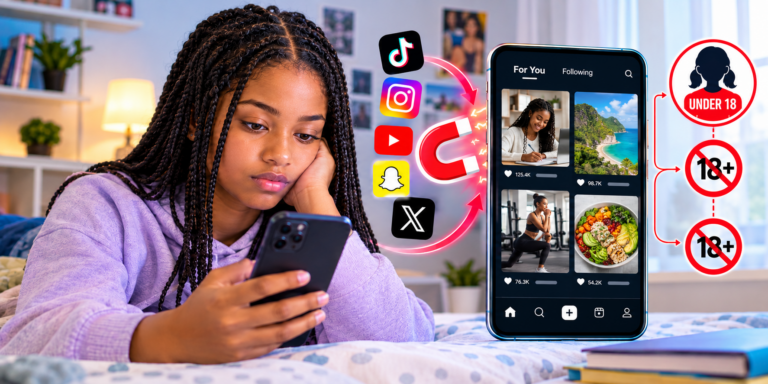
An eleven-year-old receives her first phone. She creates accounts on TikTok and Instagram. Within days, her feed contains content her parents would never approve. She did not search for it. The algorithm served it to her because she is the right age for engagement.
This is the reality children face today. They are exposed to adult content earlier than any generation in history. Not because parents are negligent. Not because children are corrupted. Because the systems designed to entertain and connect them are also systems designed to exploit them.
The Numbers Are Worse Than You Think
Research on children’s exposure to adult content reveals disturbing statistics.
The average age of first exposure to explicit content is now between eight and eleven years old. This is not the age children intentionally seek it. This is the age they accidentally encounter it. The intentional seeking comes later, often by age thirteen or fourteen.
By age eighteen, the vast majority of young people have seen explicit content. Many have seen it regularly. A significant percentage describe themselves as regular consumers. What was once a rare and shameful encounter has become a common experience of adolescence.
The exposure is not limited to explicit content. It includes violent content, hateful content, and content that sexualizes children themselves. The internet contains material that would have been unimaginable to previous generations. Children encounter it daily.
How Children Are Actually Exposed
Accidental exposure is the most common entry point.
Pop-up ads on games and websites. Auto-play videos that transition from safe content to inappropriate content. Links shared in school group chats. Search results that return unexpected content. Social media feeds that include suggestive content because the algorithm determined it would generate engagement.
The child did not intend to see this. The child did not search for it. The content found the child.
Peer exposure follows accidental exposure. Children share what they find with friends. The sharing happens in school bathrooms, on school buses, in group chats. One child’s accidental discovery becomes ten children’s exposure.
Deliberate seeking comes later. Once a child has been accidentally exposed, curiosity drives them to seek more. The seeking begins with vague searches and progresses to specific ones. The algorithm learns and serves more. The cycle accelerates.
The Grooming Connection
Beyond accidental exposure, predators deliberately target children online.
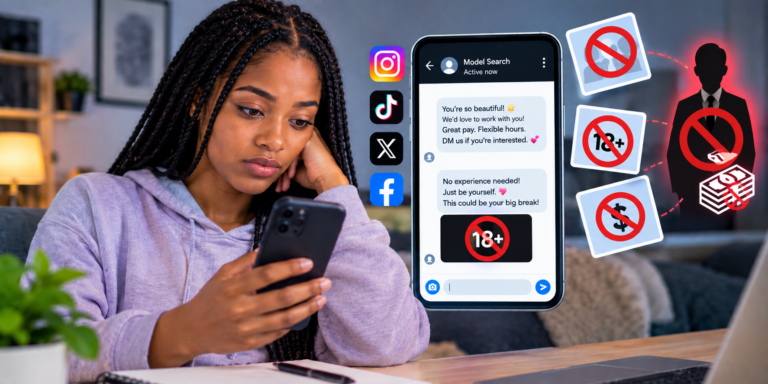
Predators create accounts that appeal to children. Gaming content, anime discussions, music fan pages. They build trust through shared interests. They engage in conversations that seem innocent. They gradually introduce inappropriate topics.
The grooming process is patient. It takes weeks or months. The predator knows that rushing triggers alarm. Slow escalation feels natural. The child does not realize what is happening until it is too late.
Predators use platform features to find victims. They search hashtags popular with children. They join groups where children gather. They exploit recommendation systems to reach young audiences. The platforms provide the hunting ground.
When predators are removed, they return under new accounts. The platform removes them again. The cycle continues. The platform cannot keep up because prevention is not profitable.
What Early Exposure Does to Developing Brains
The effects of early exposure are serious and lasting.
Brain development is disrupted. Explicit content triggers strong neurological responses. When these responses occur during critical developmental periods, the brain’s reward system is altered. The child becomes more susceptible to addiction later in life.
Emotional development suffers. Children exposed to adult content experience confusion, shame, and anxiety. They cannot process what they have seen. They cannot tell anyone because they fear punishment. The isolation compounds the harm.
Relationship development is distorted. Children who see adult content learn lessons about intimacy that are wrong. They internalize scripts that will shape their future relationships in harmful ways. The damage extends far beyond childhood.
Behavioural problems emerge. Children exposed to adult content may act out sexually. They may become withdrawn. Their academic performance may decline. Sleep disturbances are common. The signs are visible if parents know what to look for.
Why Previous Generations Did Not Face This
Previous generations had barriers between children and adult content.
Physical barriers existed. Adult content was sold in stores that checked identification. It was printed in magazines hidden behind counters. Access required effort and risk. Children could not easily obtain it.
Technological barriers existed. Before the internet, adult content was not available on demand in every home. The family television showed what networks decided to broadcast. The family computer was shared and supervised.
Social barriers existed. The consumption of adult content was stigmatized. Children who encountered it knew they had seen something wrong. The stigma created shame but also created boundaries.
These barriers have collapsed. The internet removed physical barriers. Smartphones removed technological barriers. Normalization removed social barriers. Children now face an environment where nothing protects them from content they should never see.
What Parents Can Actually Do
The situation is not hopeless. Parents can take action.
Delay smartphone access. Every year without a smartphone is a year of protection. Children do not need smartphones at eight or nine. A basic phone for calls suffices. Delay the smartphone as long as possible.
Use the protections available. Content filters on home WiFi. Parental controls on devices. Safe search settings on browsers. These tools are not perfect but they reduce exposure.
Monitor without spying. Check devices regularly but transparently. Tell children what you are checking and why. Secrecy breeds distrust. Transparency builds accountability.
Build open communication. Children should know they can report accidental exposure without punishment. The child who fears punishment hides exposure. The child who trusts parents reports it. Trust saves children.
Choose platforms designed for safety. Not all platforms are equally dangerous. Some platforms are built with child safety as a priority. ModafVibe is one of them. Zero adult content. Zero tolerance for grooming. An environment where children can connect without being exploited.
The ModafVibe Commitment
ModafVibe was built for families who are tired of fighting this battle alone.
Our platform does not allow adult content. Not hidden behind age gates. Not disguised as fashion content. Not served by algorithms that prioritize engagement over safety. Zero means zero.
Our moderation systems are designed to catch grooming behaviour. Our community standards are enforced consistently. Our algorithm does not push suggestive content to anyone, least of all children.
We cannot protect children on other platforms. But we can provide a safe alternative. A platform where parents can allow their children to connect without anxiety. A platform where children can explore without being exploited.
The mainstream platforms made choices that put children at risk. We made different choices. The result is a different kind of platform. One where safety is not a feature. It is the foundation.
Frequently Asked Questions
At what age should a child get a smartphone?
Later than most people think. Many child development experts recommend waiting until at least age fourteen or fifteen. The decision depends on the individual child and family circumstances. The principle is simple. Delay as long as possible.
Can parental controls fully protect my child?
No. Parental controls reduce risk but do not eliminate it. They are one layer of protection. Relationship, education, and platform choice are the other layers. Use all of them together.
What should I do if my child has already been exposed?
Respond calmly. Do not punish accidental exposure. Explain that what they saw is not meant for children. Answer questions honestly at an age-appropriate level. Monitor for signs of ongoing effects. Seek professional help if needed.
How do I know if my child is being groomed online?
Look for secretive behaviour with devices. New accounts on unfamiliar platforms. Gifts arriving from unknown sources. Withdrawal from family activities. Reluctance to discuss online activities. These signs do not confirm grooming but they warrant attention.
Protect Them While You Can
Childhood is short. The window to protect your children is shorter than you think. Every day they spend on mainstream platforms is a day of exposure to content they should never see and influences they cannot resist.
You cannot watch them every moment. You cannot control every device they access. You cannot follow them everywhere they go online. But you can choose where they spend their digital time.
Choose ModafVibe. A platform where children are safe. Where adult content does not exist. Where predators are not welcome. Where families can connect without fear.
The mainstream platforms will not protect your children. They profit from their attention. We built ModafVibe because children deserve better. Join us. Protect what matters most. Choose safety. Choose ModafVibe.