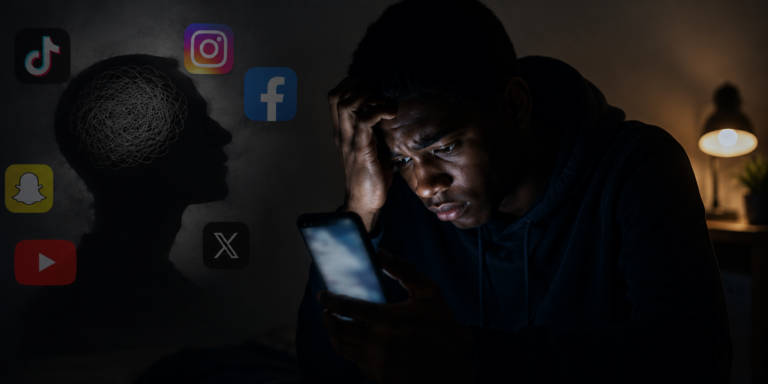
You are not weak. You are not lacking discipline. You are not a bad person. But you have noticed something changing. Content that once shocked you now seems mild. Videos that once felt like enough now leave you searching for more. You close the app feeling empty, yet you open it again minutes later. Something is happening to you that you did not choose and cannot easily stop.
The science is clear. Watching adult content on social media changes your brain. Not metaphorically. Physically. The structure and function of your brain adapt to the content you consume. Over time, those changes affect how you think, what you desire, and how you experience real intimacy.
This is not a moral lecture. It is neuroscience.
The Reward System and Dopamine
Your brain has a reward system designed to motivate behaviours essential for survival. Eating. Social connection. Sex. When you engage in these activities, your brain releases dopamine, a neurotransmitter associated with pleasure, motivation, and learning.
Dopamine is not the pleasure chemical as commonly described. It is the wanting chemical. It creates anticipation and drives you to seek out the reward. The pleasure comes later, and it is often shorter than the wanting.
Watching sexual content triggers a massive dopamine release. The brain responds to the visual stimulus as if it were a real sexual opportunity. The response is automatic and powerful. It is not a choice. It is biology.
The problem is not the dopamine release itself. The problem is what happens when the release occurs repeatedly and intensely. The brain adapts.
Desensitization and Tolerance
The brain maintains balance. When it receives excessive stimulation, it adjusts by reducing sensitivity. This is called tolerance.
With repeated exposure to adult content, the brain’s reward system becomes less responsive. The same content produces less dopamine. The same videos that once triggered strong arousal now produce a milder response. The brain has adapted.
This adaptation creates a problem. To achieve the same level of arousal, you need stronger stimulation. Content that was once exciting becomes boring. You seek out more novel, more extreme, or more intense material. The escalation is not a sign of moral decline. It is a predictable neurological response.
Research on problematic pornography use has shown that this escalation is common. Users progress from mainstream content to more extreme genres. What was once shocking becomes normal. What was once unacceptable becomes acceptable. The brain’s baseline shifts.
Physical Changes to Brain Structure
The changes are not just functional. They are structural.
A study from the Max Planck Institute for Human Development found a negative correlation between the amount of pornography consumed and the volume of grey matter in the striatum, a key part of the brain’s reward system. The more hours spent viewing, the smaller the striatum volume. The researchers concluded that regular consumption dulls the reward system.
This does not mean every viewer experiences measurable brain shrinkage. The study involved adult men with varying consumption levels. But the pattern was clear. Consumption correlates with structural changes in the reward system.
Other research has found that frequent exposure to highly stimulating content affects the connectivity between the reward system and the prefrontal cortex. The prefrontal cortex is responsible for impulse control, decision-making, and long-term planning. When its connection to the reward system is weakened, controlling impulses becomes harder.
The Prefrontal Cortex and Self-Control
The prefrontal cortex is the part of the brain that separates adults from children in terms of behaviour. It allows you to think before acting. To consider consequences. To resist immediate gratification for long-term benefit.
Chronic exposure to highly stimulating content impairs prefrontal cortex function. The brain prioritizes the immediate reward over long-term consequences. Impulse control weakens. Decision-making becomes biased toward short-term pleasure.
This is why users describe feeling powerless. They know the content is harming them. They want to stop. But the part of the brain responsible for stopping has been compromised by the very behaviour they want to stop.
The Imagination and the Loop
Soft porn and suggestive content activate an additional mechanism. The imagination.
When content is explicit, the brain processes what is shown. When content is suggestive, the brain fills in the gaps. The viewer becomes an active participant in creating the fantasy. This mental participation creates a stronger and more personalized reward response.
The imagination is powerful. It can create scenarios more arousing than any video. It can replay them at will. It can combine elements from different content into new fantasies. The brain becomes a factory for its own stimulation.
This is why suggestive content can be more addictive than explicit content for some users. The imagination never runs out of material. The internal fantasy generator keeps producing. The loop continues even when the external content stops.
The Real-Life Consequences
The brain changes have real-world consequences.
Sexual dysfunction is increasingly reported among young men. Difficulty becoming aroused by real partners. Difficulty maintaining arousal. Delayed or absent climax. The brain has been trained to respond to screen-based stimulation. Real intimacy does not provide the same intensity. The brain has been rewired.
Emotional numbness is common. Users report feeling disconnected from partners. Feeling less pleasure in other activities. Feeling flat when not consuming content. The brain’s reward system has been recalibrated. Normal pleasures feel diminished.
Relationship damage follows. Partners feel the distance. They sense the preoccupation. They compare themselves to the content. They internalize the inadequacy. Trust erodes. Intimacy fades.
Can the Brain Recover?
The brain is adaptable. The changes are not permanent. The brain can heal.
Recovery involves removing the excessive stimulation. The brain needs time to reset its reward system. The process takes weeks or months depending on the severity of the addiction and the length of exposure.
During recovery, the brain may experience withdrawal-like symptoms. Cravings. Irritability. Mood swings. Difficulty concentrating. These are temporary. They are signs that the brain is healing.
Natural rewards gradually regain their power. Real intimacy becomes pleasurable again. Normal activities feel rewarding. The flatness lifts. The brain returns to balance.
The ModafVibe Solution
ModafVibe was built to remove the trap entirely.
Our platform does not serve adult content. Not explicit. Not suggestive. Not disguised as fashion or fitness. The trigger does not exist here.
Our algorithm does not push sexual content to keep users engaged. We do not design for addiction. We built a platform for genuine connection.
You can use ModafVibe without the constant temptation. You can scroll without being ambushed by content designed to hijack your brain. You can connect with people without your reward system being manipulated.
The mainstream platforms will not change. The addiction loop is their business model. The brain changes are collateral damage they accept in exchange for revenue.
You do not have to accept it. You can choose a platform that respects your brain. Choose ModafVibe.
Frequently Asked Questions
Is watching adult content really addictive?
The World Health Organization recognizes Compulsive Sexual Behaviour Disorder as a mental health condition. Problematic pornography use is increasingly understood within an addiction framework, particularly for vulnerable individuals and heavy users.
Are the brain changes permanent?
No. The brain is adaptable. Recovery is possible with time away from the content. The timeline varies, but healing occurs when the excessive stimulation stops.
Why do I keep going back even when I do not enjoy it?
This is the hallmark of addiction. The wanting system has been hijacked. You seek the reward even when the reward no longer provides pleasure. The wanting is the compulsion. Recognizing this is the first step to breaking free.
What should I do if I am struggling?
Seek support. Talk to someone you trust. Consider professional counselling. Join recovery communities. You are not alone. Help exists.
The Choice
Your brain is the most valuable asset you have. It shapes every thought, every decision, every experience of your life. Protecting it from systems designed to exploit it is not optional. It is essential.
The mainstream platforms profit from the changes happening in your brain. They benefit from your addiction. They benefit from your escalation. They benefit from your emptiness because emptiness drives you back to them.
You can choose differently. You can choose a platform that does not profit from your brain’s vulnerability.
Join ModafVibe. Protect your brain. Reclaim your attention. Choose a platform that respects the most important organ in your body. The choice is yours. Make it today.