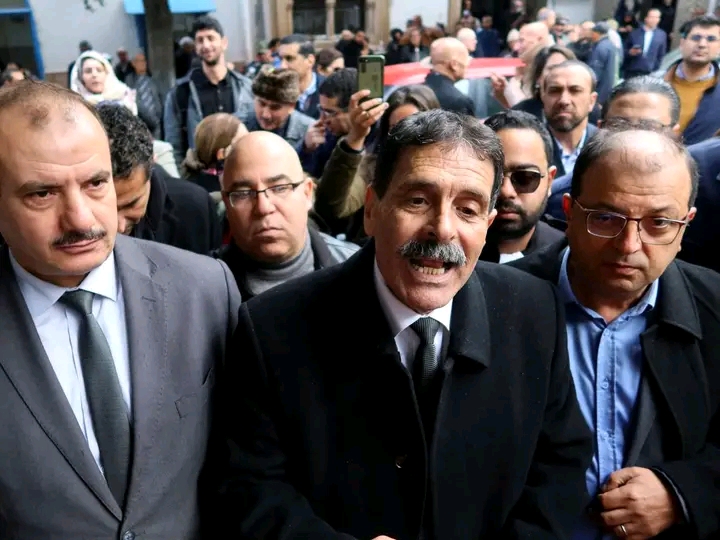
Tunisian authorities have taken another prominent opposition figure into custody as part of an ongoing political crackdown. Police arrested Ayachi Hammami at his residence to carry out a five-year prison sentence, following a court's decision to uphold convictions against dozens of government critics. Last week, an appeals court confirmed prison terms for a group of opposition leaders, businesspeople, and lawyers, who were accused of plotting against state security in a case that opponents and rights groups call politically motivated. Sentences ranged from four to 45 years. Hammami, a former human rights minister, announced his arrest in a video shared online by his family. In the recording, he vowed to continue his activism from prison and declared he would begin a hunger strike. His detention follows that of fellow opposition activist Chaima Issa, who was taken into custody last week to serve a 20-year sentence from the same high-profile case. Around 40 individuals have been prosecuted, including former officials and intelligence chiefs. Critics argue the charges—including allegations of attempting to overthrow the government—are fabricated and meant to silence dissent through the judicial system. Authorities are also expected to detain Najib Chebbi, the head of the main opposition coalition, who received a 12-year sentence. Twenty others charged in the case have fled the country and were tried in absentia. President Kais Saied has denied interfering with the judiciary, though when the case began in 2023, he warned that judges who acquitted the defendants would be considered accomplices. Since suspending parliament in 2021—a move opponents labeled a coup—Saied has governed by decree and incorporated expanded powers into a new constitution. A “fake news” law passed in 2022 has also been used to detain journalists, activists, and lawyers critical of his administration. International human rights organizations, including Amnesty International and Human Rights Watch, have condemned the convictions, calling for the sentences to be overturned due to fair trial violations and political motivations. The crackdown has led to the imprisonment of numerous high-profile figures from across Tunisia’s political spectrum.
Are you sure you want to delete this post?

Getting more likes...
Getting more comments...
Getting new posts...